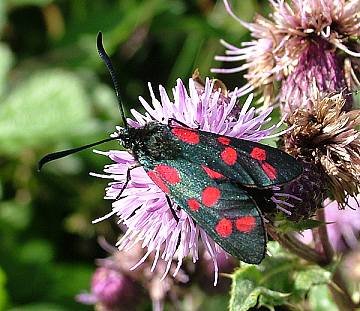
Six-spot Burnet
Zygaena filipendulaeOften found in large numbers on Lancing Ring. It is distinctly identified by the sixth red spot located right at the tip of the wing.
Site: Lancing RingDay-flying Moths Gallery
While most moths are active under the cover of darkness, several striking species have adapted to the daylight. These "day-flyers" are often brightly coloured as a warning to predators, making them a common and beautiful sight across the Lancing landscape.
Often found in large numbers on Lancing Ring. It is distinctly identified by the sixth red spot located right at the tip of the wing.
Site: Lancing Ring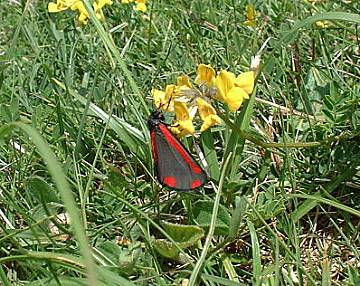
A striking moth with deep pink and slate-grey wings. Closely linked to Common Ragwort, which its yellow-and-black striped caterpillars depend upon.
Site: Coastal Path / Downs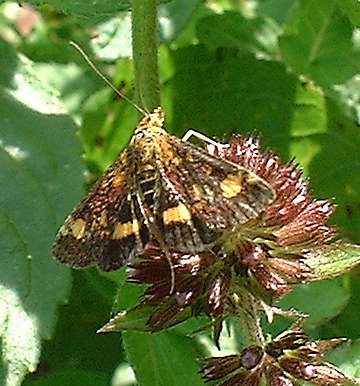
A small, active moth with beautiful gold-on-purple markings. Often found flitting around herbs in the mint family within Lancing gardens.
Site: Local Gardens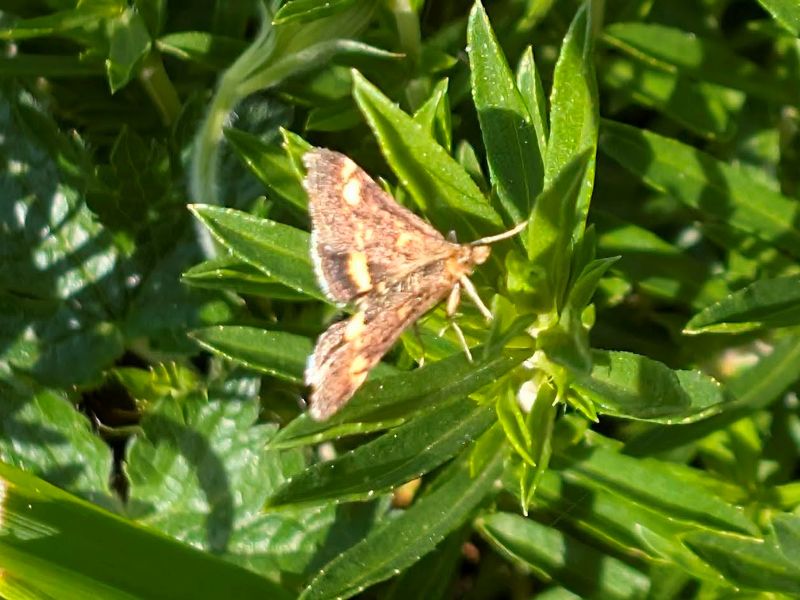
A small, active moth with beautiful gold-on-purple markings. Often found flitting around herbs in the mint family within Lancing gardens.
Site: Local Gardens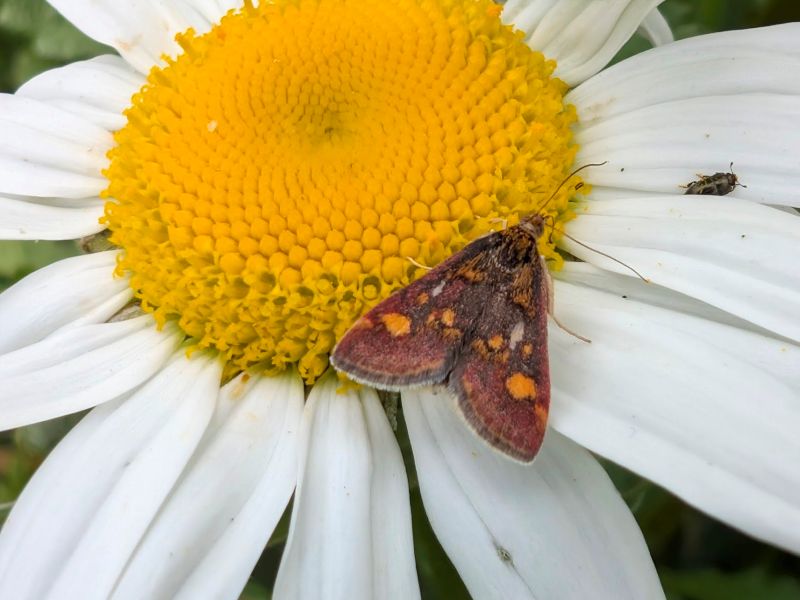
Wingspan c.20 mm. This distinctive purple and gold species flies both during the day and at night, and is distributed throughout much of Britain. Preferring dry grassland and chalky downland habitats, the moth is double-brooded, flying from May to June and July to August. The larvae feed on corn mint (Mentha arvensis) and thyme (Thymus)..
Site: Local Gardens uk moths