Flies - Page 2
Diptera
Species on this page
- Lucillia sp. — Greenbottle
- Eupeodes luniger — Hoverfly
- Eupeodes corollae — Migrant Broadtail
- Epistrophe eligans — Hoverfly
- Platycheirus sp. — Hoverfly
- Chironomidae — Non-biting Midge
- Sarcophaga sp. — Flesh-Fly
- Fannia lustrator — Forest Fly
- Fannia spp. — Forest Fly& Lesser House Fly
- Rhinophora lepida — Pouting Woodlouse Fly
- Merodon equestris — Greater Bulb Fly
- Bombylius major Dark-edged Bee-fly
- Myathropa florea — Common Batman Fly
- Hylemya_sp. — Tachinid Fly
- Bibio marci — St Mark's Fly
- Scathophaga_stercoraria - Yellow Dung Fly (Female)
- Bellardia sp.
- Pipizella sp
- Phymatocera-aterrima- Solomons Seal Sawfly
- Episyrphus balteatus- Marmalade Hoverfly
- Meliscaeva auricollis- Spotted Thin-tail Hoverfly
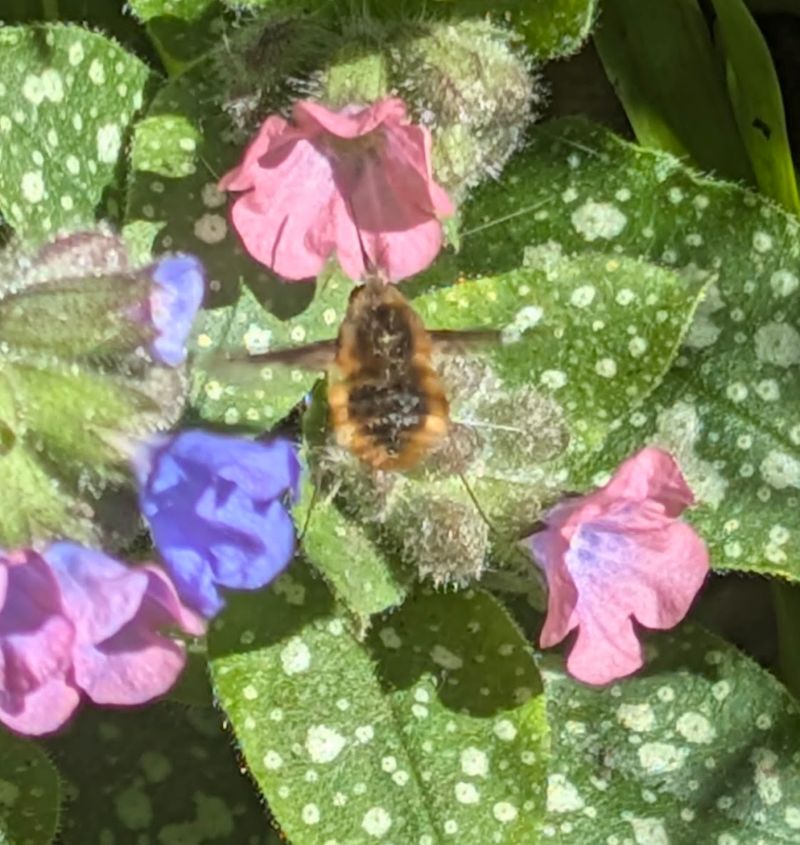
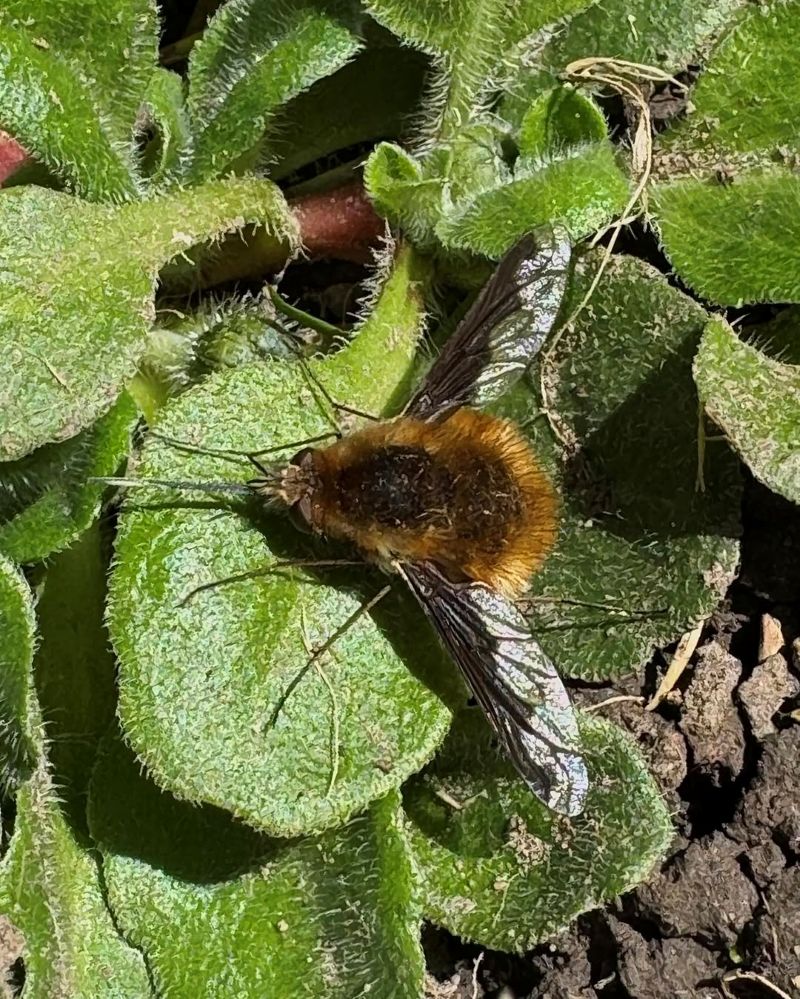 Bombylius major — Dark-edged Bee-fly — 28.03.2026 — Photo
by Mark Garrad
Bombylius major — Dark-edged Bee-fly — 28.03.2026 — Photo
by Mark Garrad Lucilia sp.
Greenbottle
Muscidae
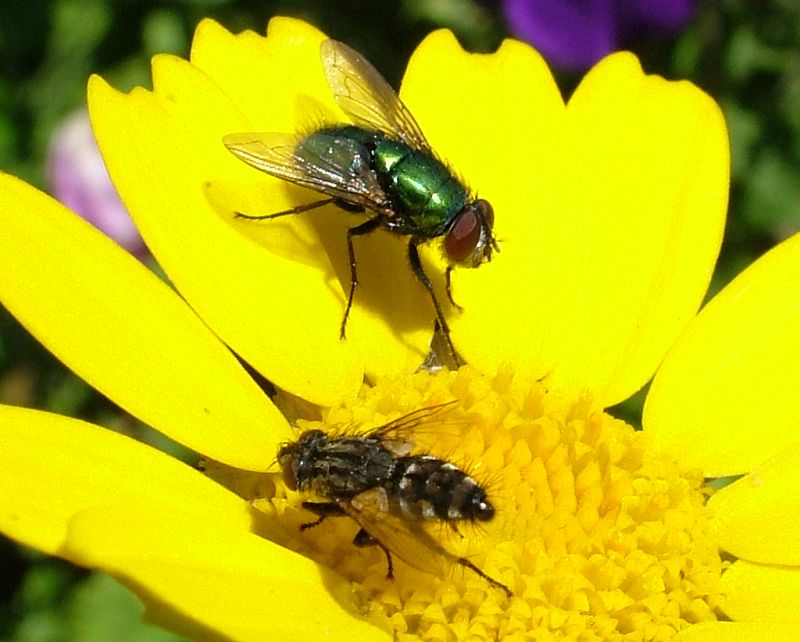 Two flies: Lucilia sp.
(Greenbottle) and Sarcophaga sp. (Flesh-Fly) — ID
needs verification
Two flies: Lucilia sp.
(Greenbottle) and Sarcophaga sp. (Flesh-Fly) — ID
needs verification 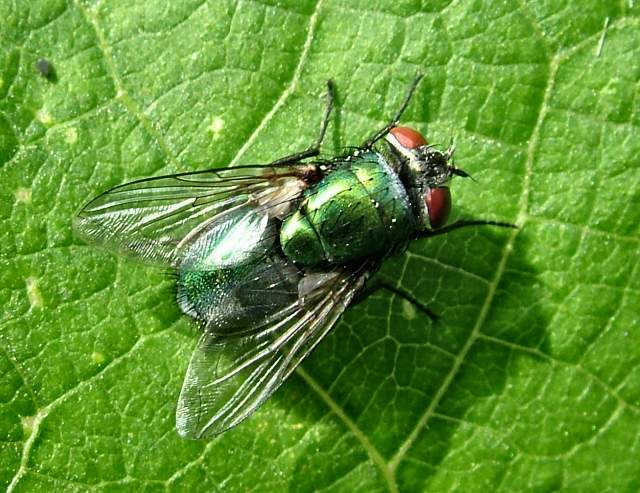 Lucillia sp. — Greenbottle —
Garden — 16.08.2005
Lucillia sp. — Greenbottle —
Garden — 16.08.2005 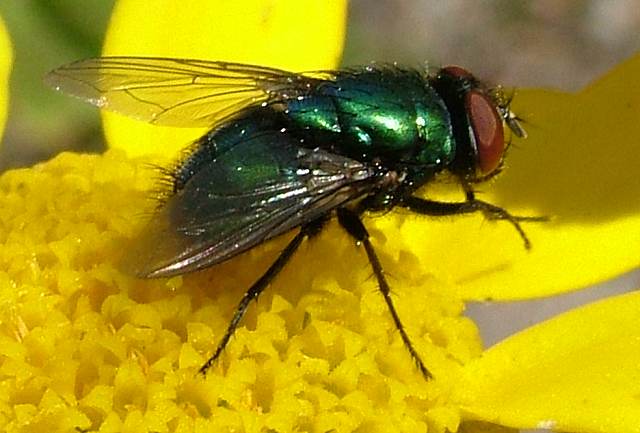 Lucillia sp. — Greenbottle —
Garden — 16.08.2005
Lucillia sp. — Greenbottle —
Garden — 16.08.2005 Eupeodes luniger
Lunuled Broadtail Hoverfly (Spring Eupeodes)
Syrphidae
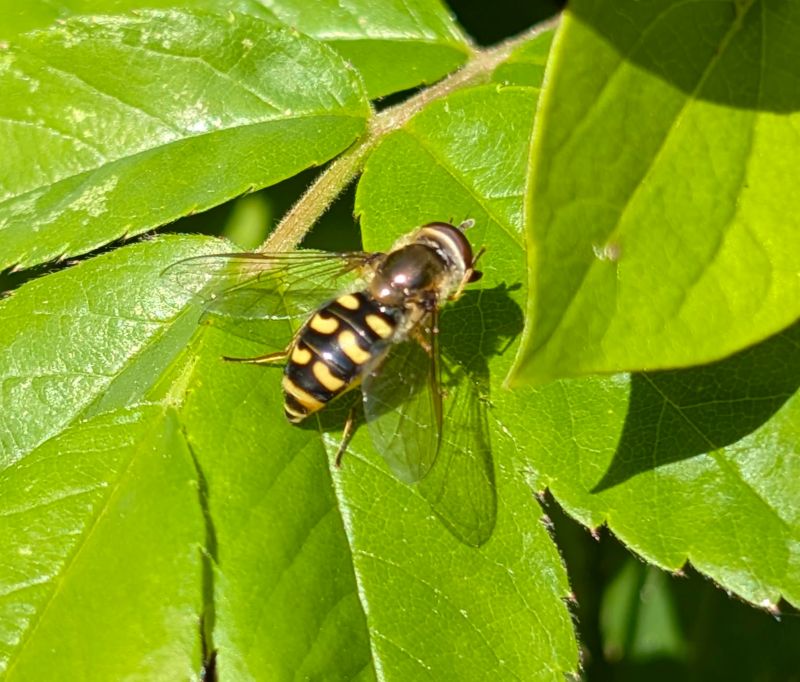 Eupeodes luniger — Garden —
08.04.2026
Eupeodes luniger — Garden —
08.04.2026 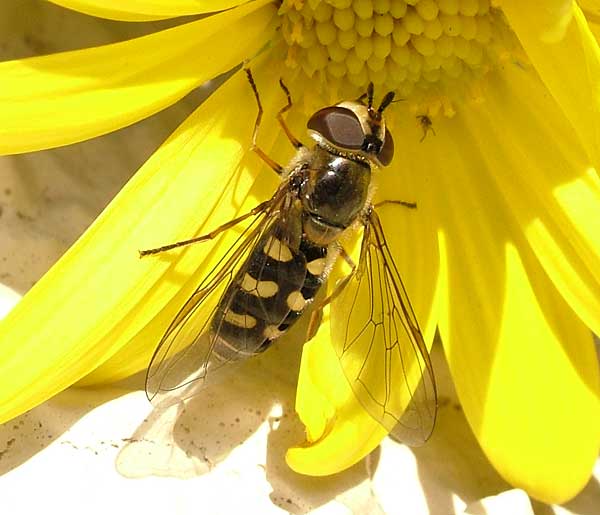 Eupeodes luniger — Front garden — 21.01.2006
 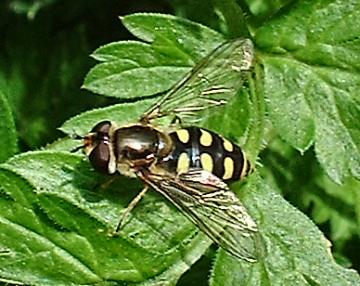 Eupeodes luniger — Mash Barn Lane — 24.04.2005
 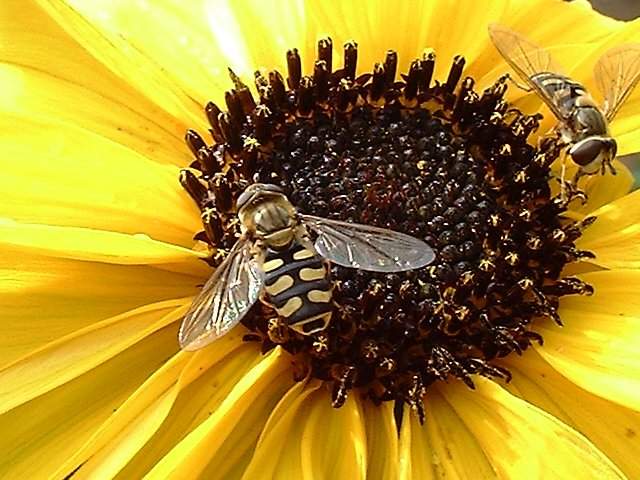 Eupeodes luniger — Garden — 17.07.2004
 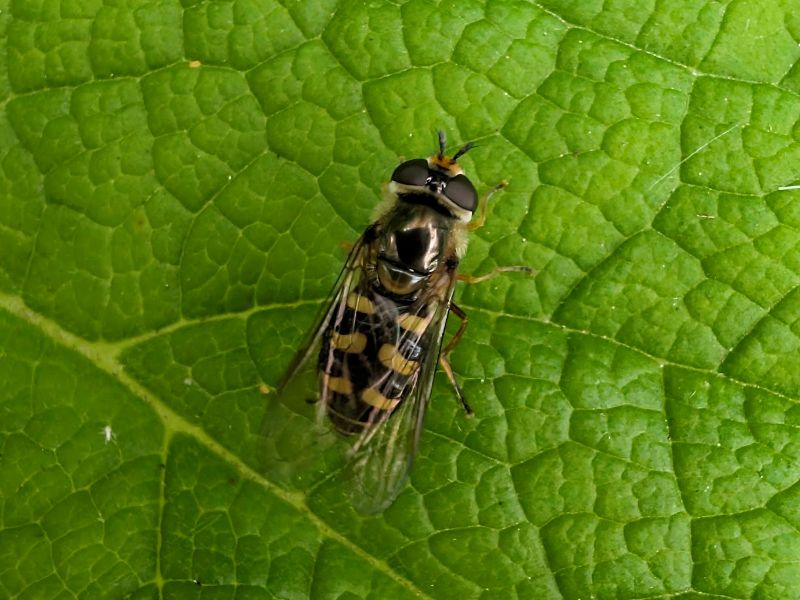 Eupeodes
luniger (f) — Garden — 17.04.2026
Eupeodes
luniger (f) — Garden — 17.04.2026 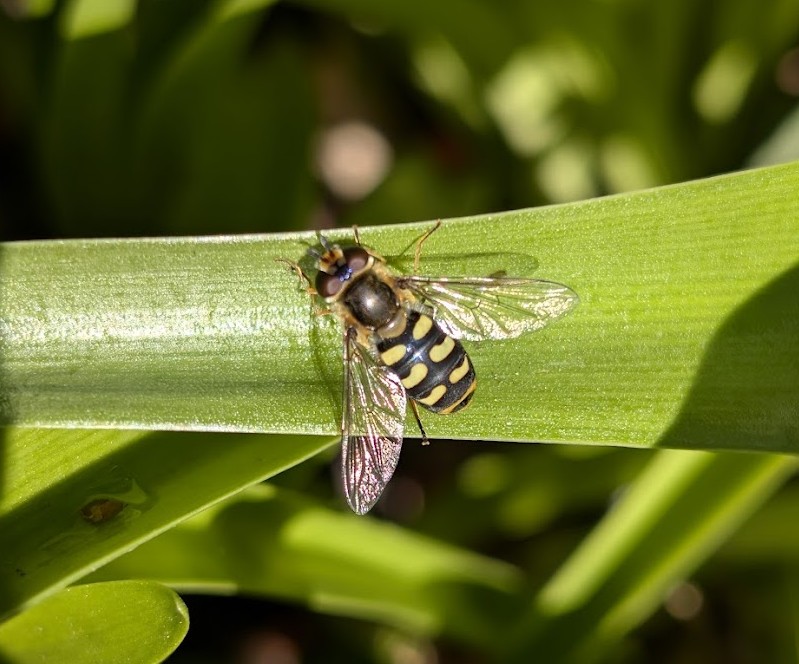 Eupeodes luniger (f) — Garden —
02.04.2026
Eupeodes luniger (f) — Garden —
02.04.2026 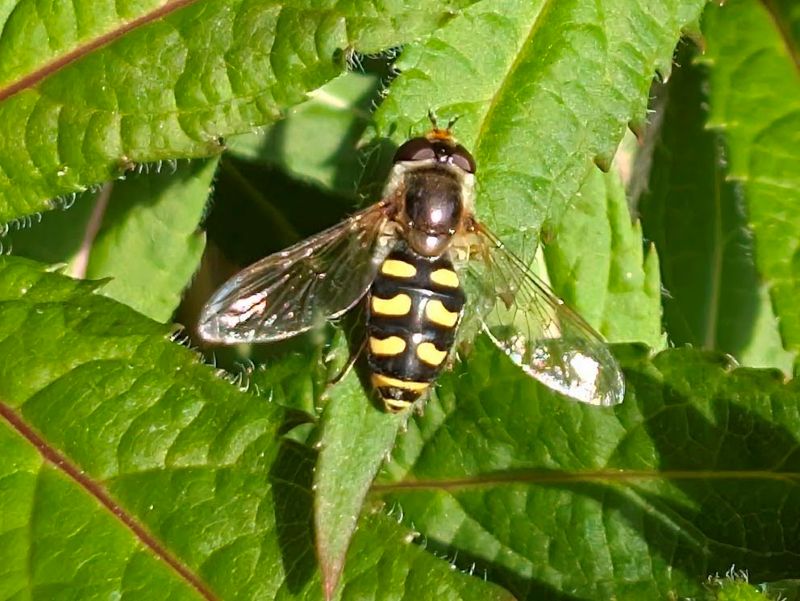 Eupeodes luniger (f) — Garden —
03.05.2026
Eupeodes luniger (f) — Garden —
03.05.2026 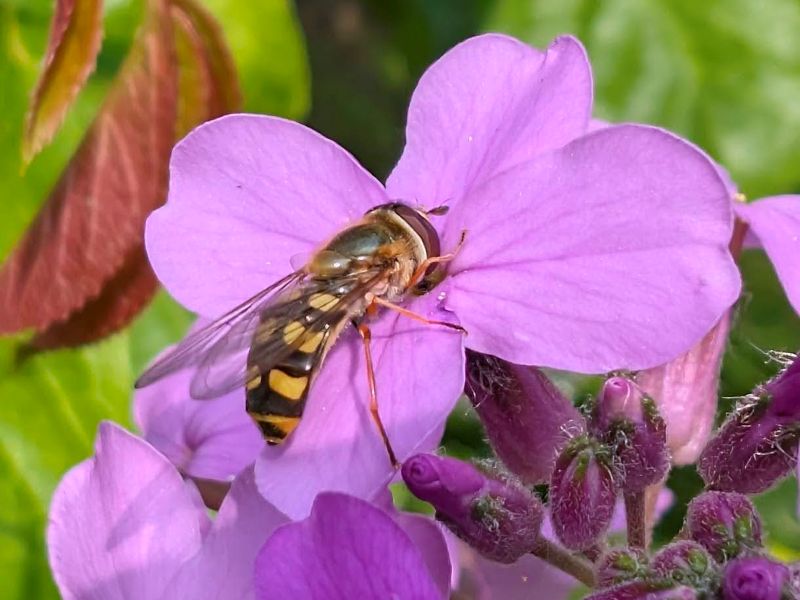 Eupeodes luniger to be
confirmed — Garden — 08.05.2026
Eupeodes luniger to be
confirmed — Garden — 08.05.2026 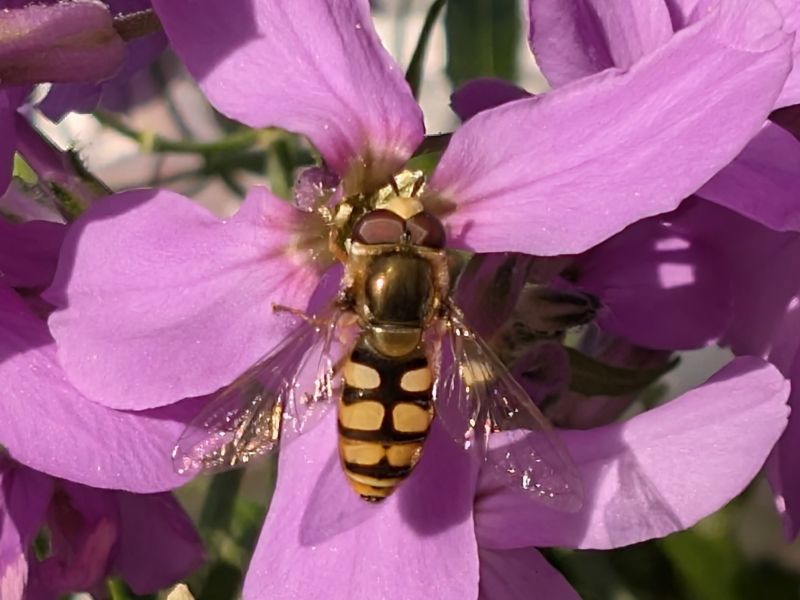
Eupeodes corollae
Migrant Broadtail - Male
Syrphidae
— Garden — 25.05.2026High degree of certainty, ID from Obsidentify.org
Epistrophe eligans
Hoverfly
Syrphidae
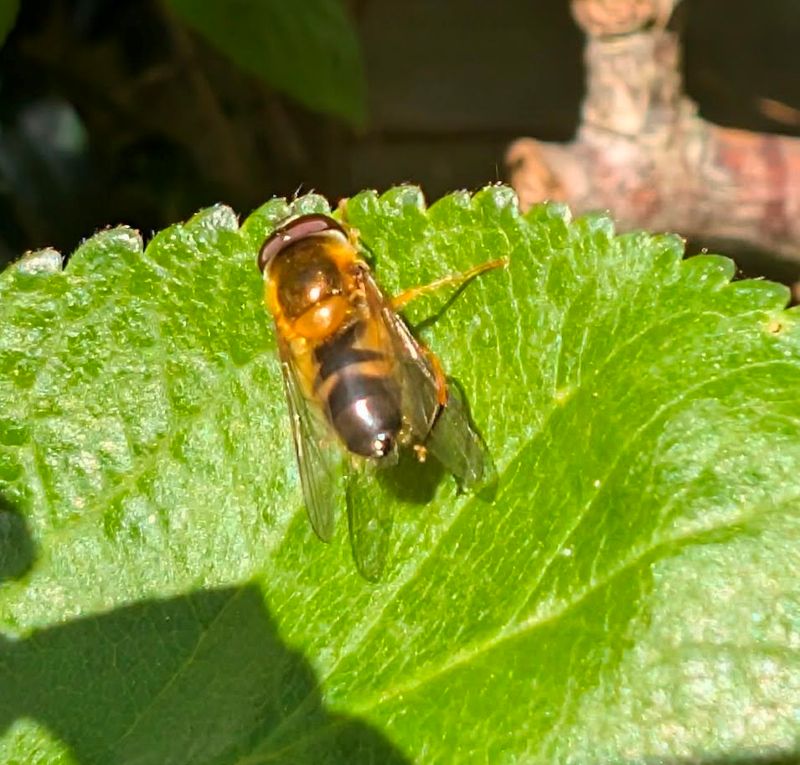 Epistrophe eligans — 18.04.2026
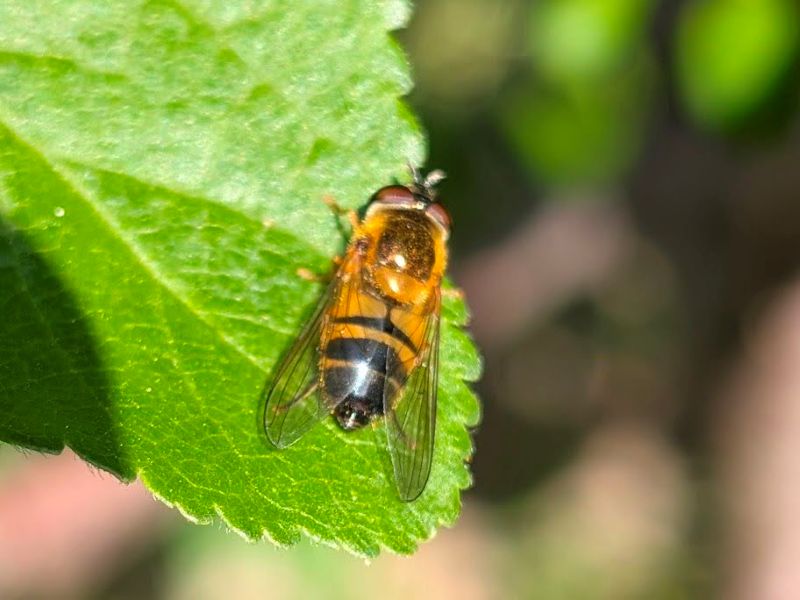 Epistrophe eligans — 01.05.2026
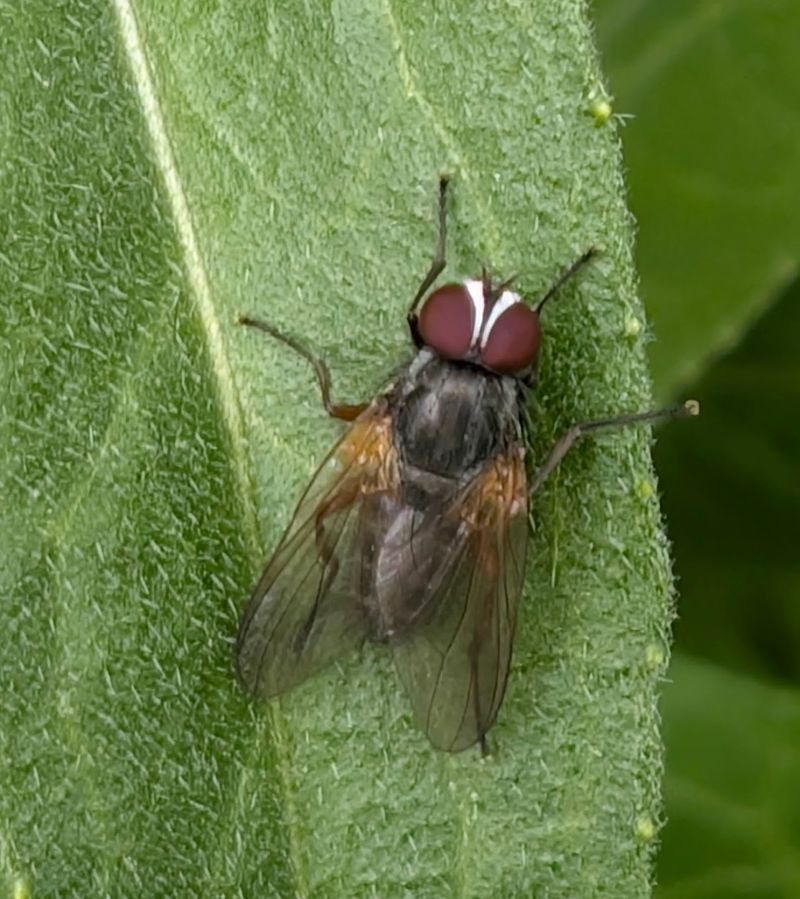 Fannia
lustrator — 21.04.2026
Fannia
lustrator — 21.04.2026 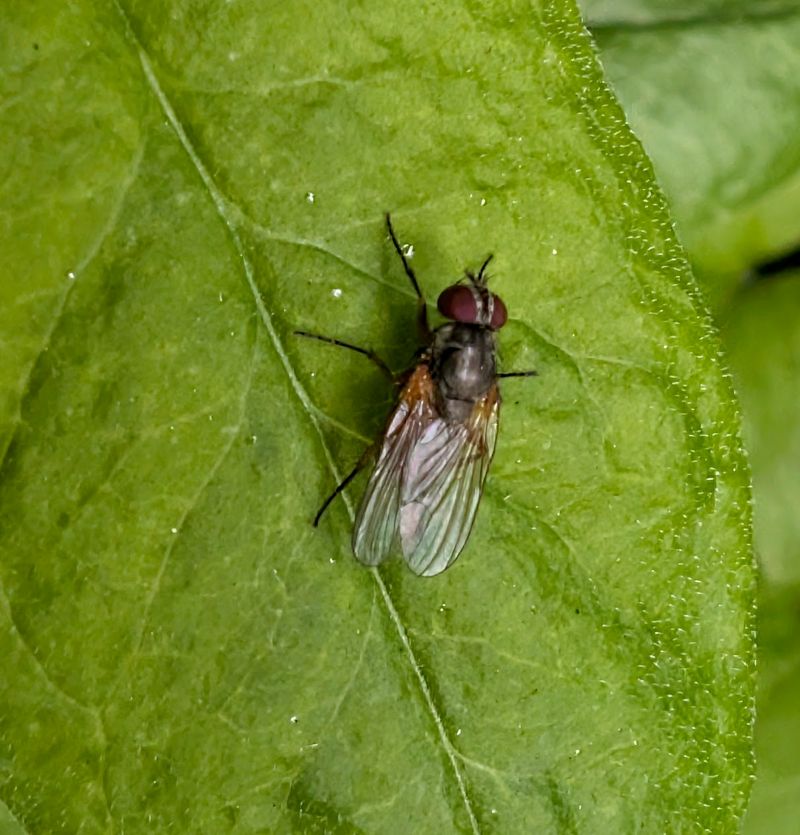 Fannia lustrator (Female) —
25.04.2026
Fannia lustrator (Female) —
25.04.2026 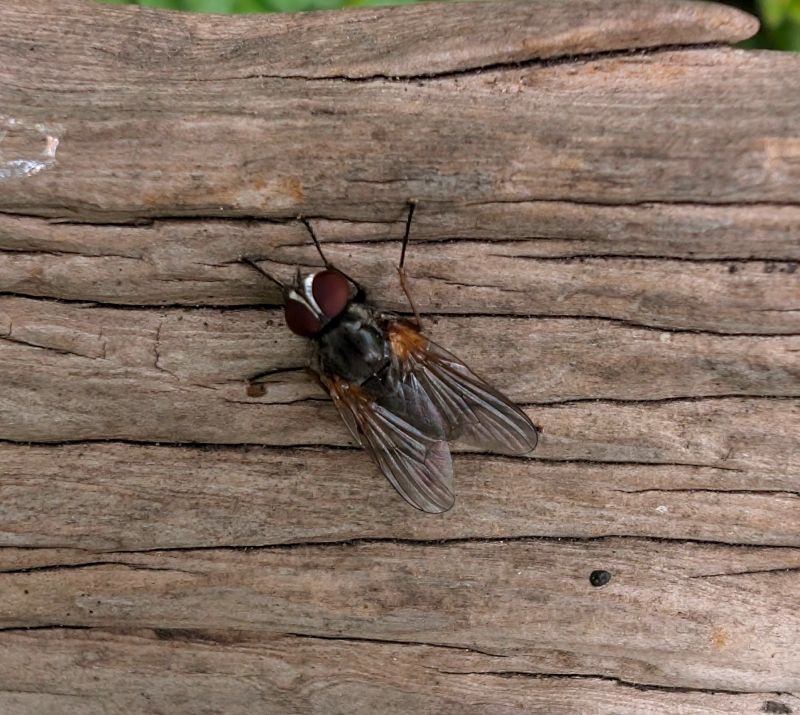
Rhinophora lepida
Pouting Woodlouse Fly
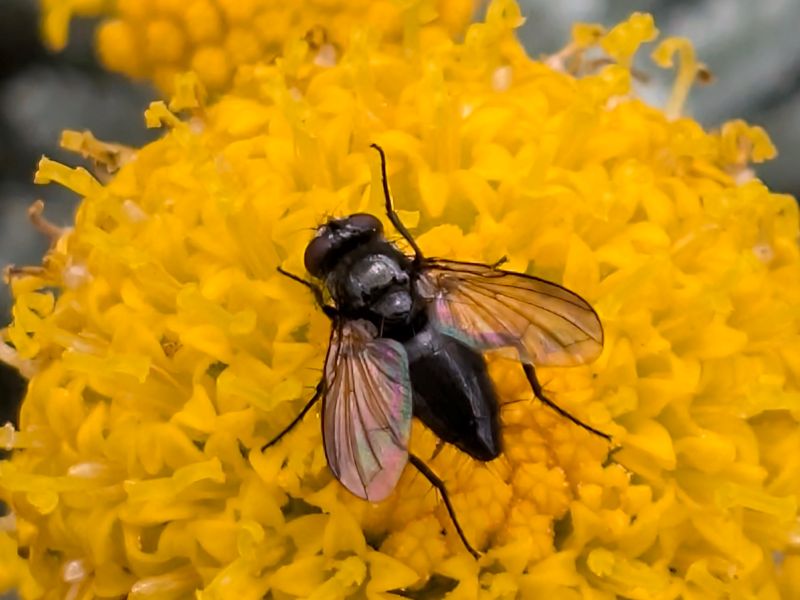 Recorded: 23.06.2026
Location: Garden | Family: Rhinophoridae
View Species Profile »
Merodon equestris
Greater Narcissus Bulb Fly (Greater Bulb Fly)
Syrphidae
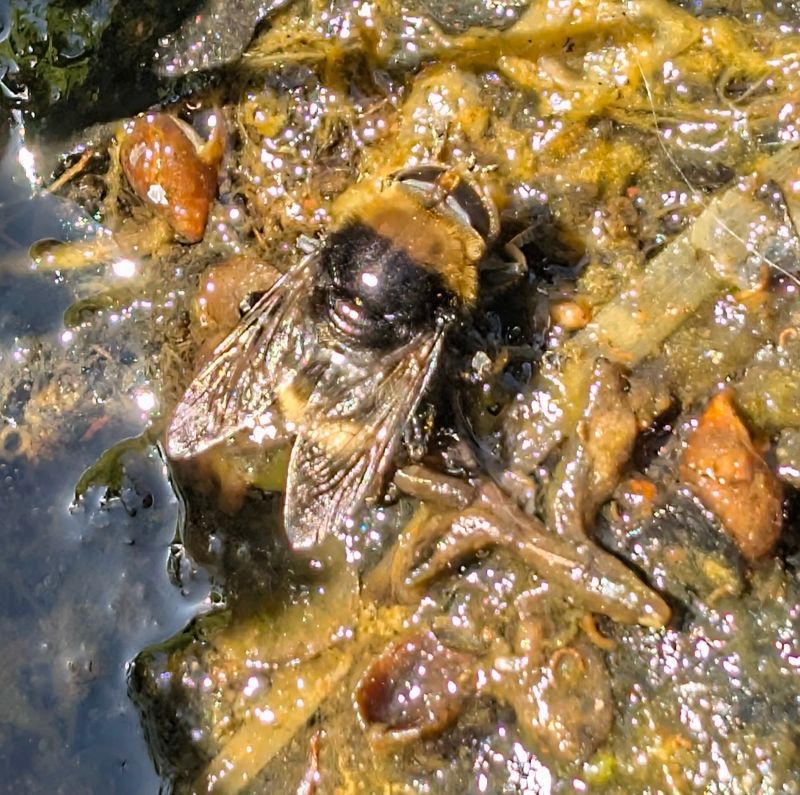 Merodon equestris — Greater Bulb Fly — Garden — 22.04.2026 (Identified by Trevor James Southward)
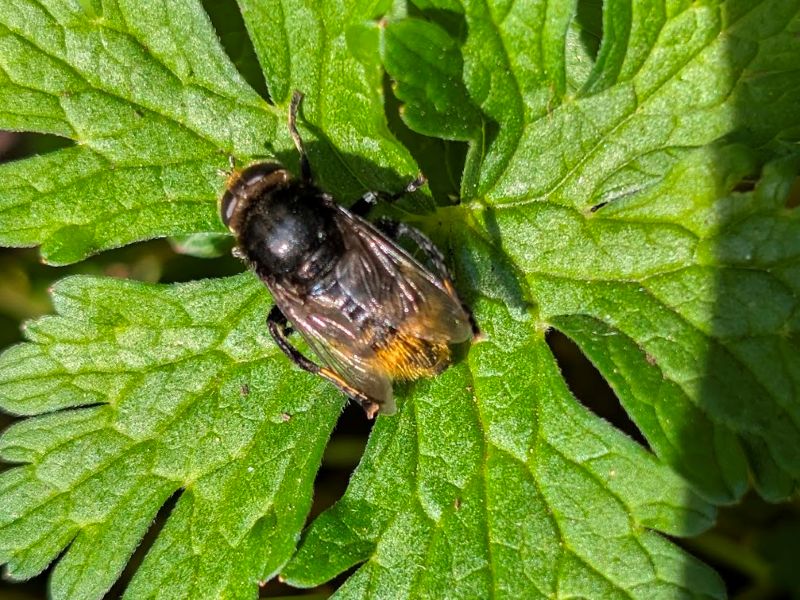 Merodon equestris — Greater Narcissus Bulb Fly — Garden — 09.05.2026 (Identified by Graham Watkeys - UK Diptera)
Bumblebee Mimic: This species is a remarkable mimic of bumblebees. It is highly polymorphic, meaning it occurs in several different colour forms (morphs) to match various local bee species.
Identification: Unlike the Volucella mimics, Merodon is distinguished by a noticeable thickening of the hind femur (thigh) and a specific lack of the feathery antennae seen in similar large hoverflies. Its larvae develop within the bulbs of lilies and daffodils.
Garden Habitats: Often found in gardens where spring bulbs are present, particularly in sun-drenched, sheltered spots where they can be seen hovering low to the ground or resting on foliage.
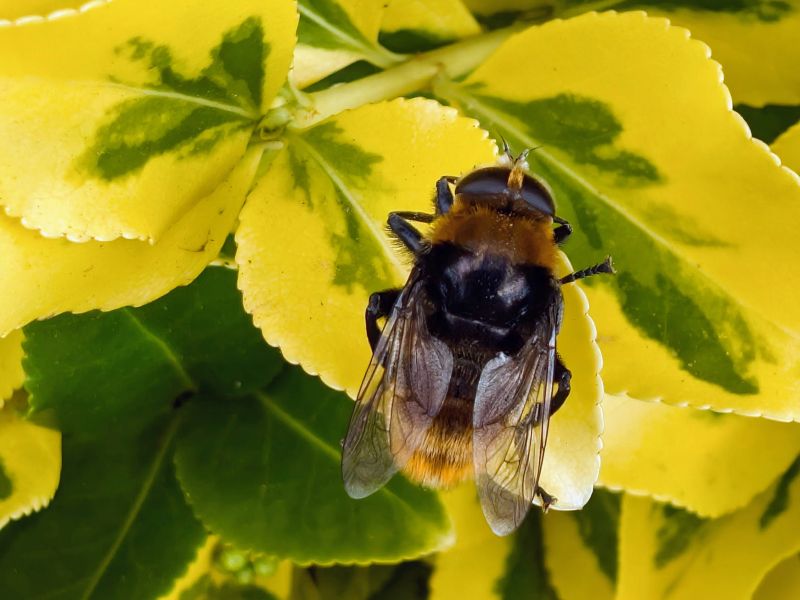 Merodon equestris — Greater Narcissus Bulb Fly — Garden — 12.05.2026
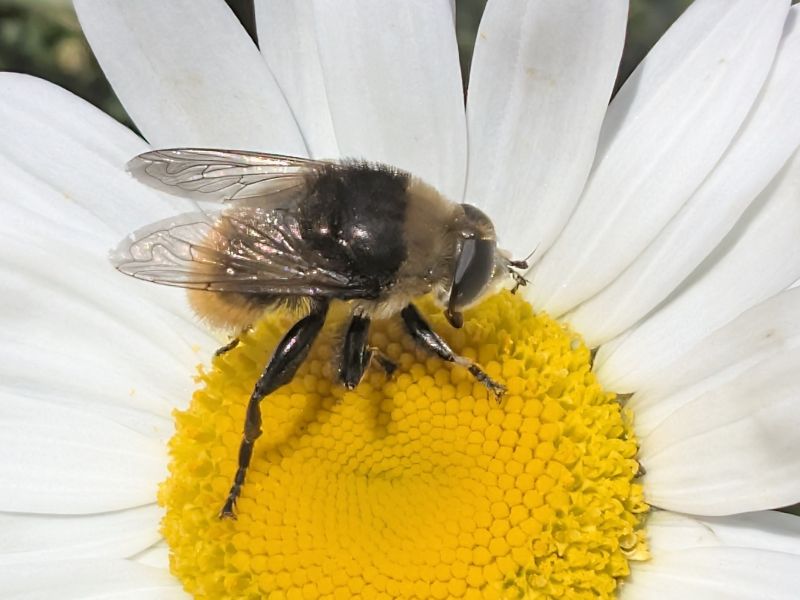 Merodon equestris — Greater Narcissus Bulb Fly — Garden — 17.05.2026
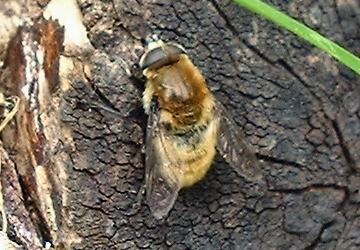 Merodon equestris — Narcissus Bulb Fly — Garden — 29.05.2004 — File: 8845

Notes: Initially looking like a Muscid, this specimen was identified as a Hylemya candidate by Steven Falk. This genus is part of the Anthomyiidae family. They are notoriously difficult to identify to species level from photos alone, but are common visitors to damp garden areas.
Observation: Spotted basking near the water's edge. The slender body and specific bristle patterns are characteristic of this group.
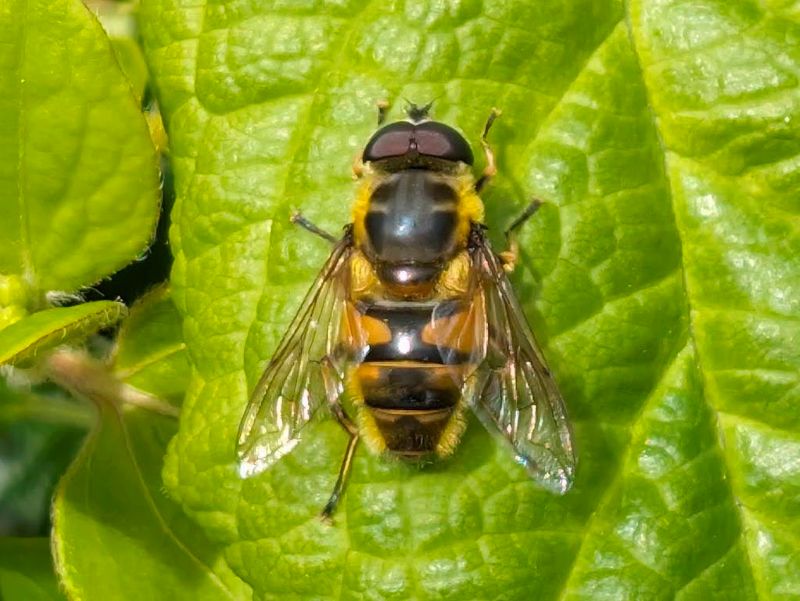 Myathropa
florea (m)— Common Batman Fly — Garden — 25.04.2026
Myathropa
florea (m)— Common Batman Fly — Garden — 25.04.2026
Honeybee Mimic: A remarkable example of Batesian mimicry; this hoverfly has evolved to look and fly like a honeybee drone to deter predators.
Identification: Key features include the dark front "feet" (tarsi) and the noticeably thickened, curved hind tibia. It also features a broad dark stripe running down the centre of its face.
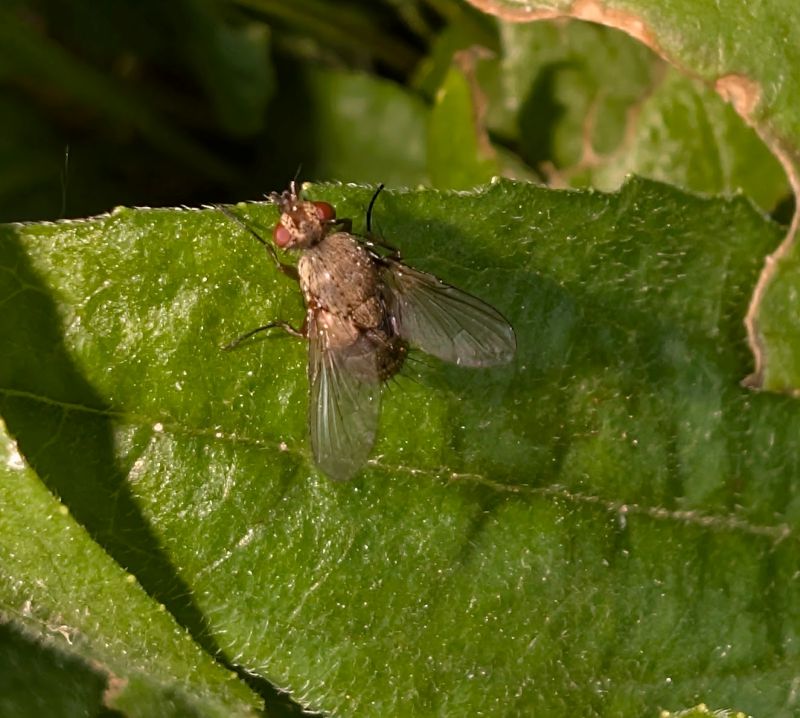
Identification: Siphona is a genus of small, bristly Tachinid flies. While they can look similar to Muscids at a distance, they possess a unique, long, "elbowed" proboscis used for nectar feeding. This specimen was identified with the help of the UK Diptera community and Steven Falk.
Lifecycle: These are beneficial garden residents; Siphona species are parasitoids, typically targeting the larvae of craneflies (leatherjackets) or small caterpillars.
Garden Habitats: Often seen basking on foliage or visiting flowers. Their small size makes them easy to overlook, but they play a vital role in the local ecosystem by helping to regulate the populations of other insects.
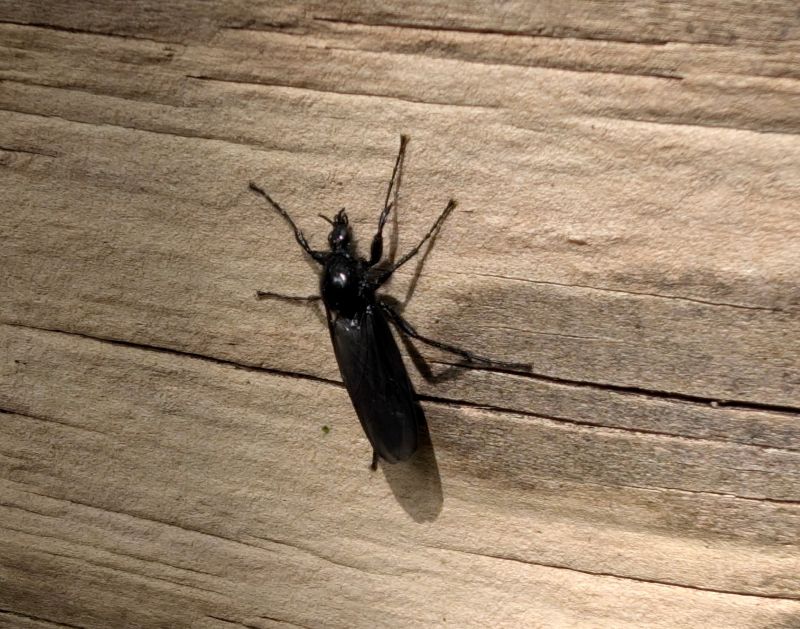 Bibio marci (Female) — Garden —
25.04.2026 — Found on St Mark's Day
Bibio marci (Female) — Garden —
25.04.2026 — Found on St Mark's Day Phenology: Appropriately named, these flies almost always emerge around St Mark's Day (25th April). Their flight period is very short, usually lasting only a few weeks.
Identification: This is a female specimen, identified by her small head and elongated body. The legs are notably shiny and black. Males are easily distinguished by their much larger, bulging eyes.
Garden Benefit: While they can appear in large, slightly intimidating swarms, they are harmless pollinators. Their larvae live in the soil, feeding on decaying leaf mulch and helping to improve garden soil structure.
Scathophaga stercoraria
Yellow Dung Fly (Female)
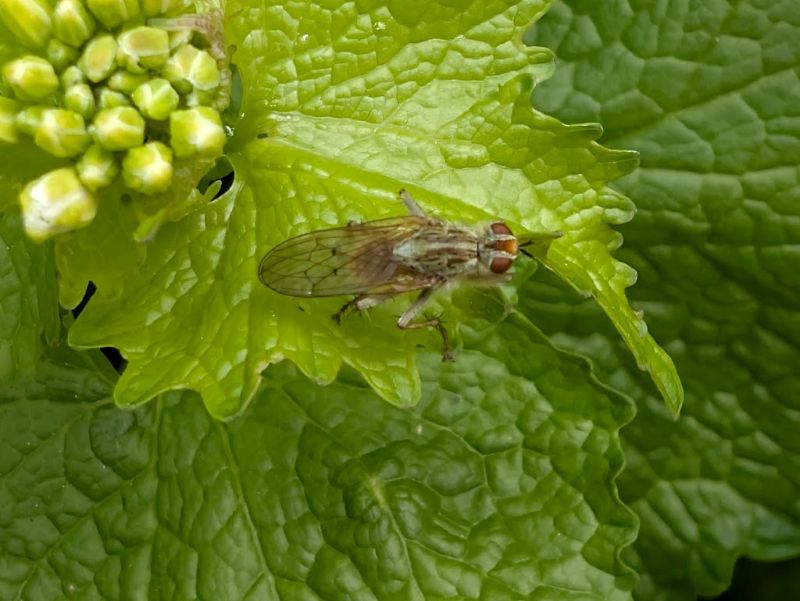 Female
— Garden — 29.04.2026
Female
— Garden — 29.04.2026 This appears to be a Yellow Dung Fly (specifically a female Scathophaga stercoraria).
While the males are famously bright golden-yellow and furry, the females are typically more green-grey or brownish and heavily bristled. Despite the name, adults are actually voracious predators of other flies and also consume nectar for energy. They are extremely common across Britain and are often seen near livestock or compost areas.
Bellardia sp.
Blow Fly
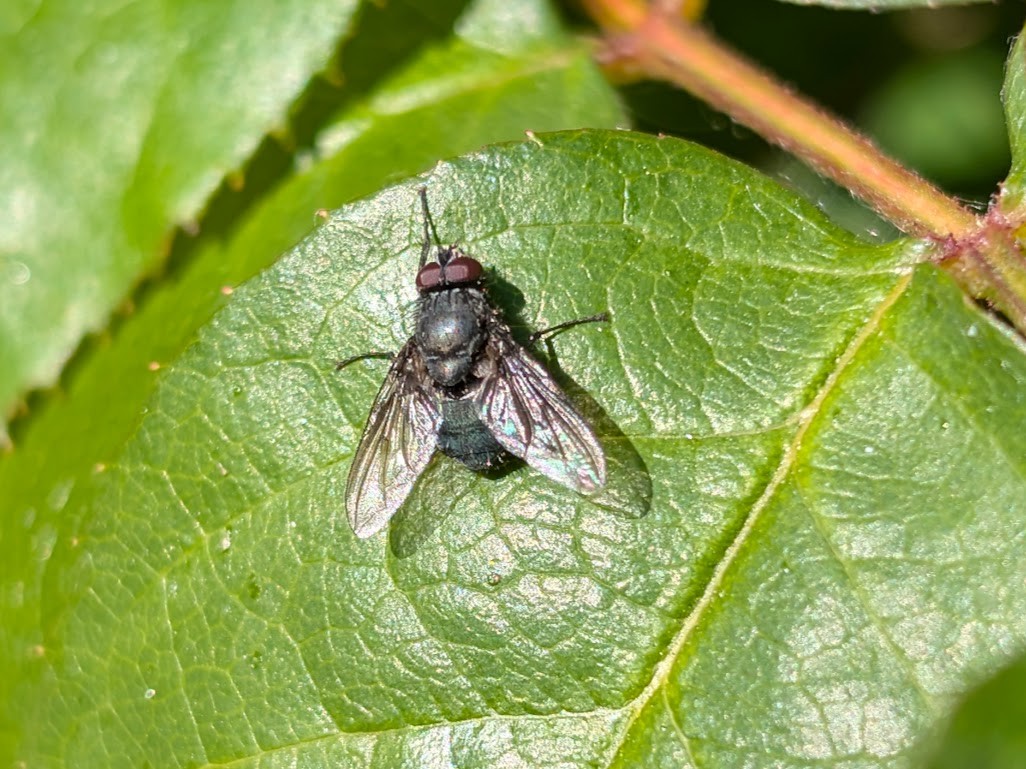 — Garden — 29.04.2026
Bellardia is a small genus of hoverflies distinguished by their compact, dark bodies and subtly patterned abdomens, often with pale side patches or faint banding. They tend to favour shaded vegetation in woodland margins, damp meadows, and lush garden corners, where adults rest low on leaves. Unlike many brightly marked syrphids, Bellardia species are understated in appearance, but their ecological role is significant: the larvae are specialised predators of root aphids and other subterranean soft‑bodied insects. Adults typically fly from late spring into early autumn, visiting a variety of flowers for nectar and pollen while remaining relatively inconspicuous.
.
Pipizella sp.
Flatface HoverFly
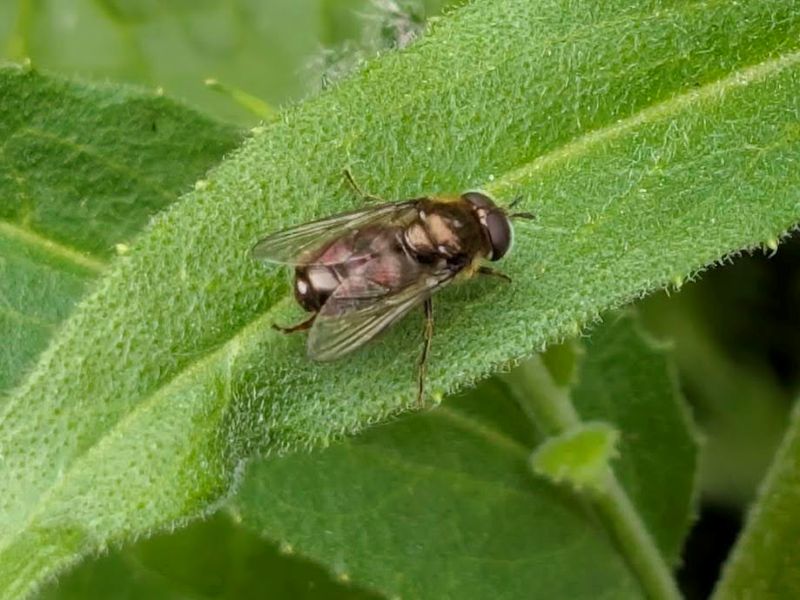 — Garden —01.04.2026
Pipizella is a genus of small, dark hoverflies often found resting on foliage in woodland edges, hedgerows, and shaded gardens. They are easily recognised by their compact bodies, dusky wings, and subtle pale markings. Unlike many brightly patterned hoverflies, Pipizella species are more understated, but they play an important ecological role: their larvae are predators of aphids, helping to regulate garden and woodland pest populations. Adults are typically seen from spring through early autumn, visiting flowers for nectar and pollen.
.
Phymatocera-aterrima
Solomons Seal SAWFLY
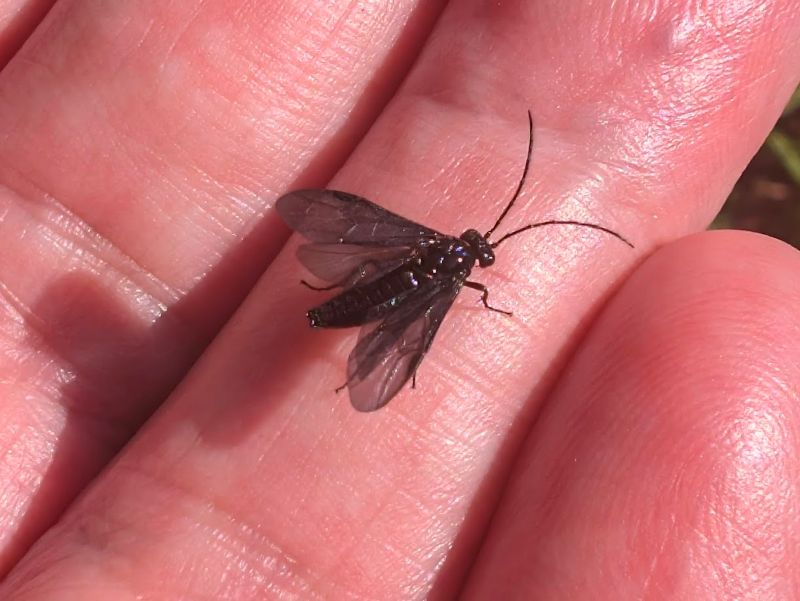 — Garden —03.05.2026
Benson (1952) described this species as expanding, and knew it as occurring north to Cheshire. This expansion has continued with records now up to Sutherland. It is mostly recorded in gardens, although can also occur in more natural habitats (Musgrove, 2023). The Solomon's Seal Sawfly. An entirely black species often seen flying around the host plant. Very similar to Rhadinoceraea micans. In Phymatocera aterrima the antennae are at least three times as long as the width of the head and as long as the whole body. In micans the antennae are about twice as long as the width of the head and about as long as the abdomen. The larvae feed on Solomon's seal.
Sawflies.org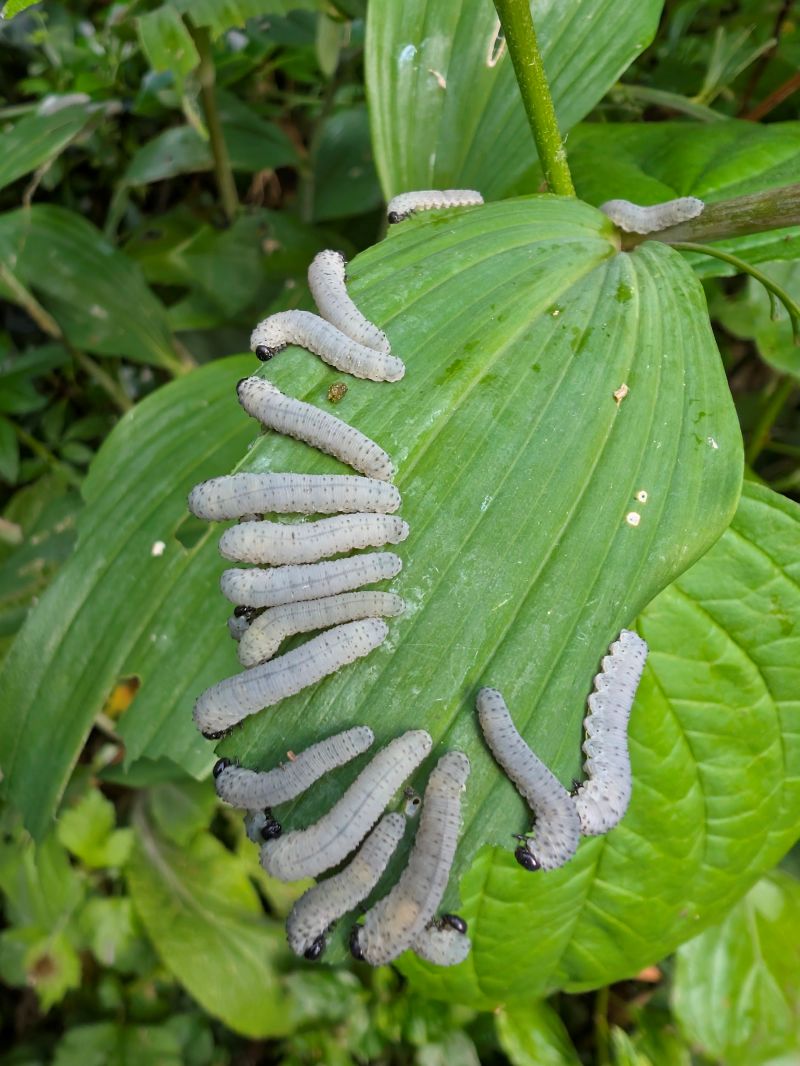 — Garden —12.06.2026
Larva record. Found feeding on the host plant in the garden. These larvae are specialised feeders on Solomon's seal and are permitted to defoliate the plant as part of the garden's natural cycle.
.
Episyrphus balteatus
Marmalade Hoverfly
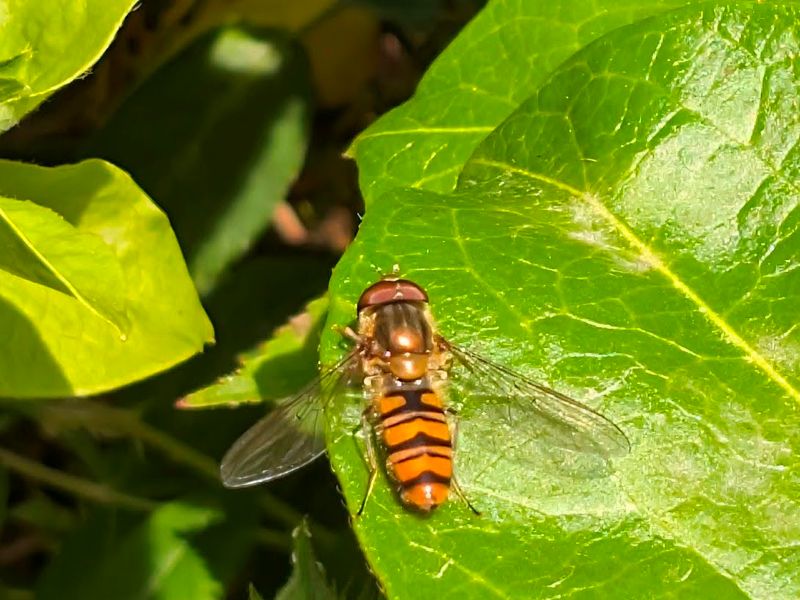 — Garden — 05.05.2026
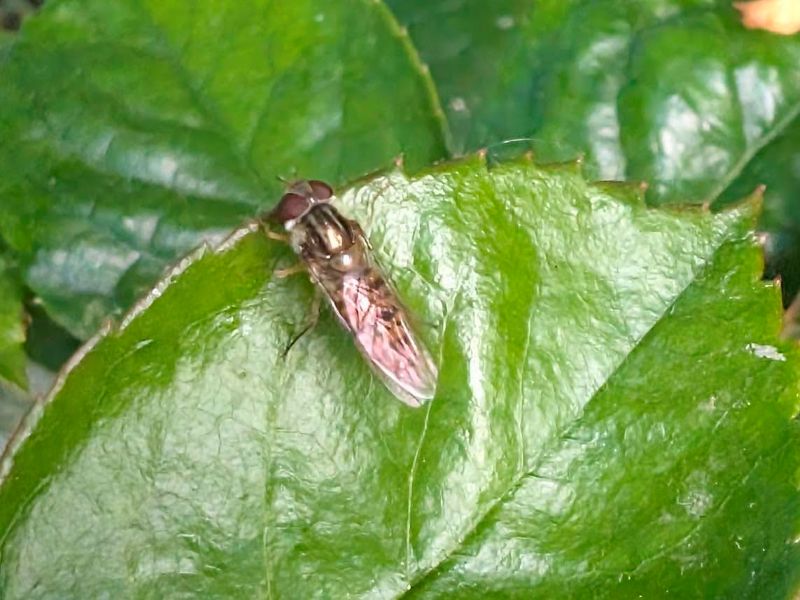 — Garden — 13.05.2026
Episyrphus balteatus, sometimes called the marmalade hoverfly, is a relatively small hoverfly (9–12 mm) of the Syrphidae family, widespread throughout the Palaearctic region. It is considered the most abundant native hoverfly in Central Europe.
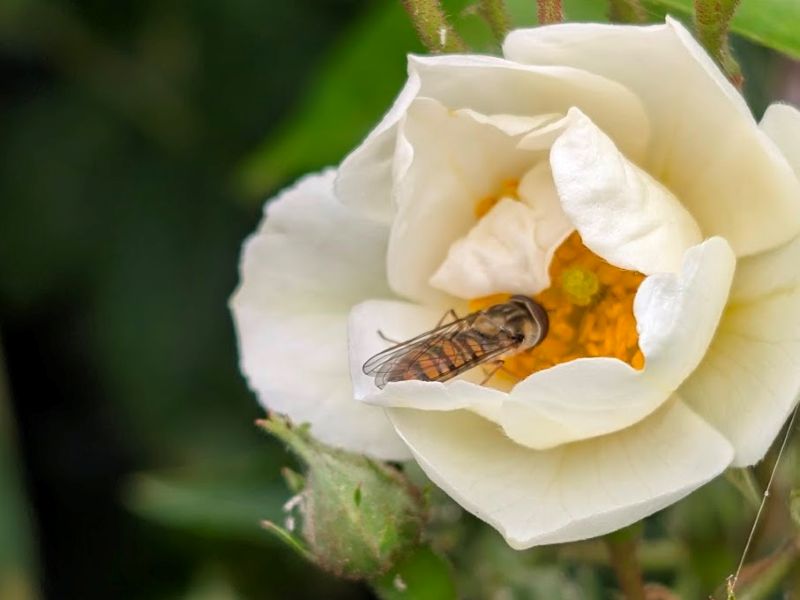 — Garden — 15.05.2026
Meliscaeva auricollis
Spotted Thin-tail
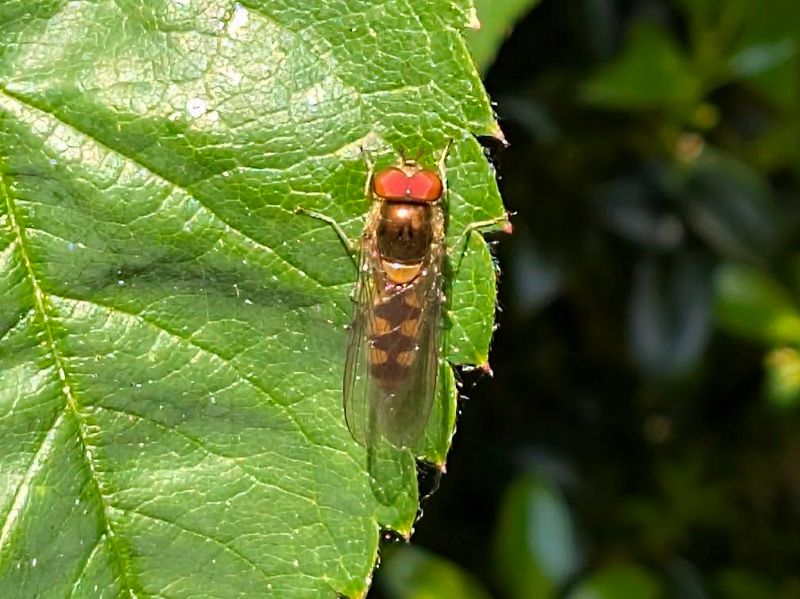 — Garden — 05.05.2026
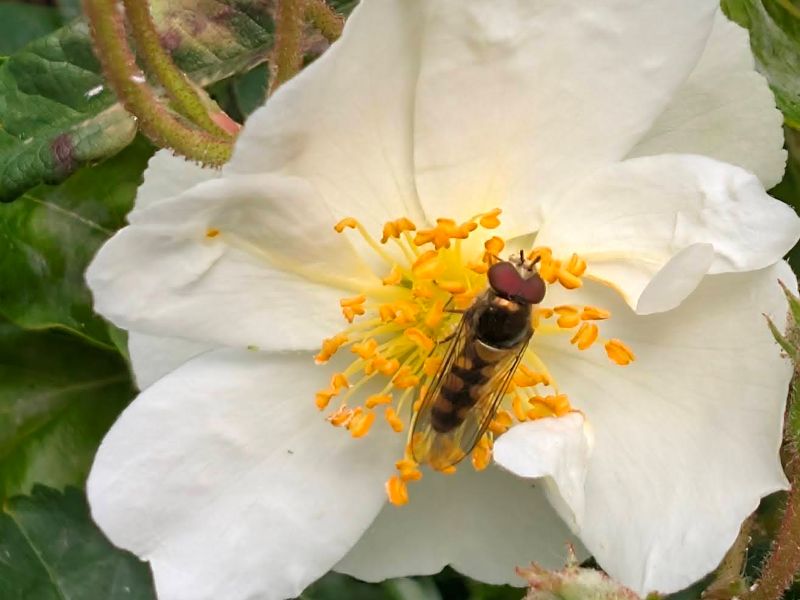 — Garden — 13.05.2026
Meliscaeva auricollis is a West Palearctic species of hoverfly.