The Edge Effect
Bridleways and rural access paths are more than just thoroughfares; they are essential ecotones—where two distinct habitats meet. In Lancing, these paths often provide a sanctuary for wildlife that requires the shelter of a hedgerow alongside the open foraging grounds of a meadow or field margin.
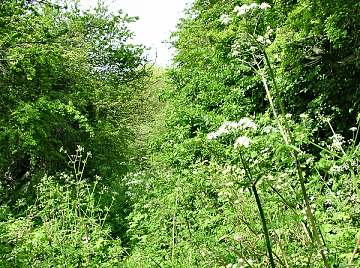
Mash Barn Lane (Historical Context)
Recorded: April 2005
This image captures the lane before it was cleared for modern infrastructure. This site once served as a prime example of a mature rural lane habitat.
Heritage Habitats: Mature lanes like the old Mash Barn Lane often hosted centuries of undisturbed soil and complex root systems. These areas were critical for ground-nesting bees and provided a consistent nectar source from established blackthorn and hawthorn.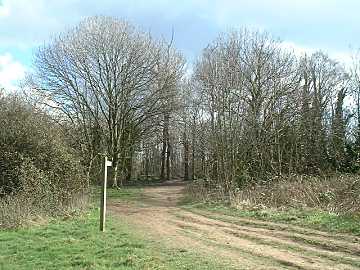
Path to McIntyres Field
Site: Lancing Ring LNR
The route connecting the Dewpond to McIntyres Field is a quintessential downland bridleway, characterized by flint-rich soil and scrubby margins.
Thermal Refuges: The sun-warmed flint underfoot and the sheltered scrub alongside create "micro-climates." Butterflies often use these paths as thermal corridors, basking in the morning sun while remaining close to the protection of the bushes.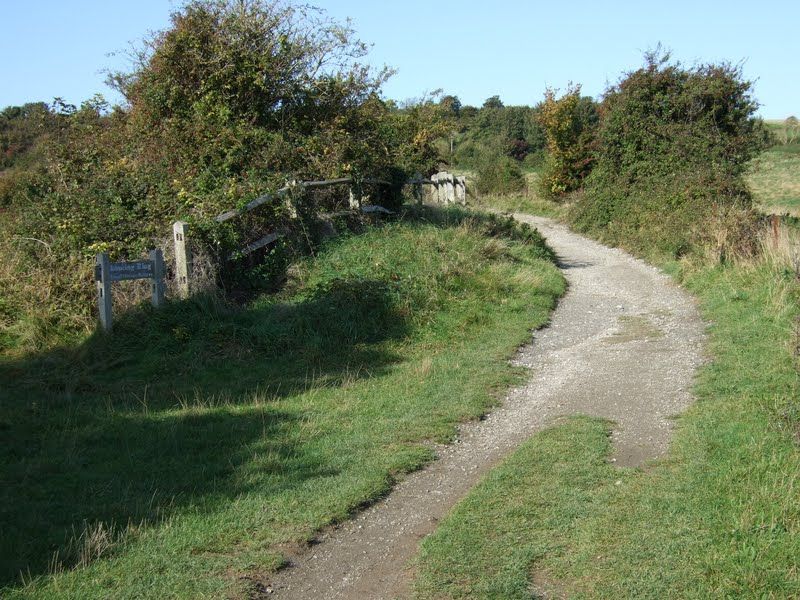
Bridle Path: Towards the Ring Dewpond
Recorded: January 2012, Lancing Ring
This section of path leading towards the high ground of the Ring shows the classic wide-open margins that define our chalk bridleways.
Succession Control: Bridlepaths are unique because they are kept open by hoof and foot traffic. This prevents larger woody scrub from taking over, allowing low-growing specialist chalk wildflowers—like bird's-foot trefoil—to colonise. This "controlled disturbance" is critical for the larvae of our local blue butterflies.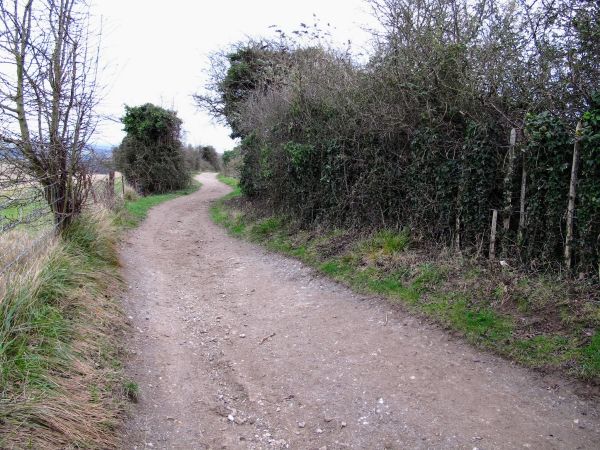
Bridle Path (Autumn Perspective)
Recorded: October 2010, Lancing Ring
Seen here in autumn, this view illustrates how the bridleway maintains habitat continuity even as the year closes.
Seasonal Corridors: The edges of bridleways are vital "seed banks" and overwintering sites. Even in October, the diverse grasses and dried wildflower stems provide essential cover for invertebrates and seed-eating birds, proving that these linear habitats function year-round.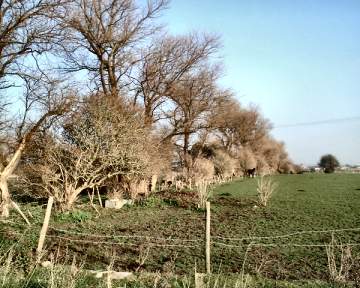
Old Salts Willow Margins
Recorded: December 2004
The entrance to the Old Salts Nursery area features mature Willow trees, marking a transition into a damper, paddock-based habitat.
Damp-Ground Diversity: Willows are exceptionally productive for biodiversity. They host more species of moth than almost any other tree. Bridleways fringed with Willow provide a crucial early-season nectar source through their catkins, supporting queen bumblebees as they emerge from hibernation.