LAMIACEAE (Labiatae)
Commonly known as the Mint family, these plants are easily identified by their square stems, opposite pairs of leaves, and hooded, two-lipped flowers. Most members are highly aromatic and are vital resources for long-tongued insects.
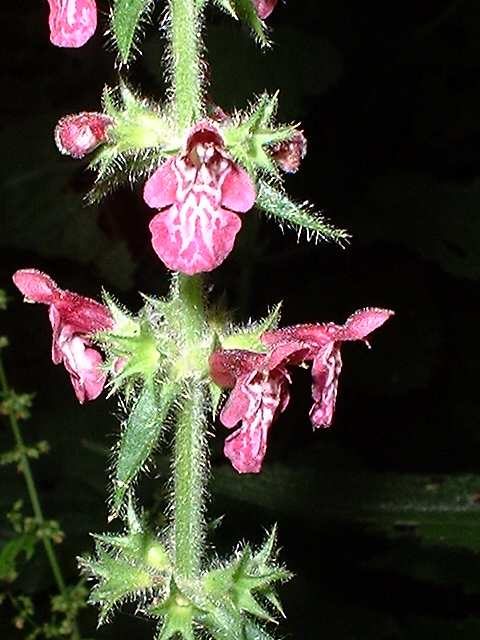
Hedge Woundwort
Stachys sylvaticaHeight: 60–100 cm | Flowering: June – September
Found typically in the shaded margins of Lancing’s rural paths, this plant has deep claret-coloured flowers with intricate white patterns on the lower lip.
Ecological Value: Despite its somewhat pungent smell when bruised, it is a favourite of the Garden Bumblebee. It thrives in the "ecotone" between woodland and open paths, providing nectar when the early spring flowers have faded.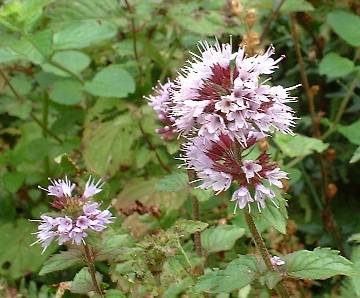
Water Mint
Mentha aquaticaRecorded: 16 August 2004, Garden Pond Margin
A perennial that loves wet feet, often found at the edges of ponds and damp ditches. Its rounded, lilac flower heads are a magnet for hoverflies and butterflies in late summer.
Garden Biodiversity: Cultivating Water Mint in garden margins is one of the simplest ways to support local biodiversity, providing both a scent and a high-yield nectar source during the August heat.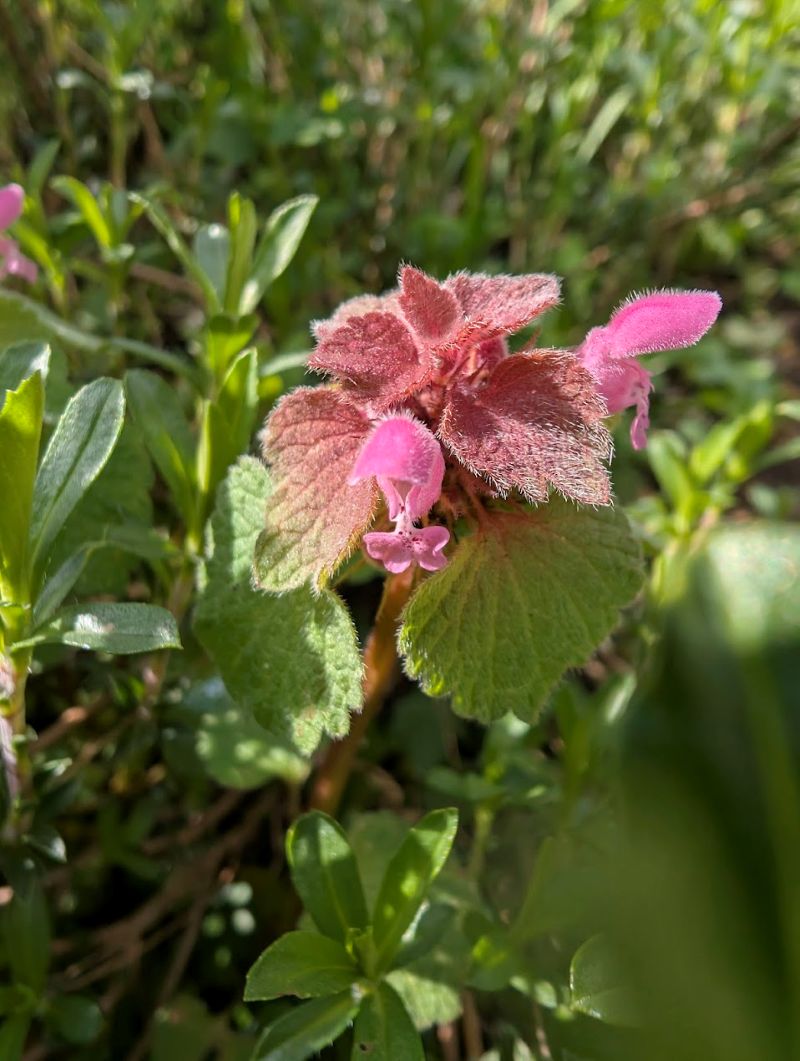
Red Dead-nettle
Lamium purpureumRecorded: 28 March 2026, Garden
Often mistaken for a stinging nettle before it flowers, this "dead" nettle has no sting. Its leaves often turn a beautiful purplish-red towards the top of the stem.
The Early Lifeline: Flowering as early as March, the Red Dead-nettle is an essential "first food" for queen bumblebees and hairy-footed flower bees emerging from hibernation. Its presence in our gardens at this time of year is a vital part of the local ecological calendar.