Ivell�s Sea Anemone � Edwardsia ivelli
Widewater Lagoon Local Nature Reserve � TQ 196 041
Edwardsia ivelli, known as Ivell�s sea anemone, is one of the rarest animals in the world. It was first discovered at Widewater Lagoon by Professor Richard Ivell in 1973 � the only site at which it has ever been recorded. A small, worm-like species that lives buried in the lagoon sediment with only its tentacles exposed, it was last confirmed present in 1983. It has not been found since, and is listed as critically endangered, with some authorities considering it possibly extinct.
The photograph below is believed to be the only known image of a living specimen. The animal is half-buried in the sandy sediment, and is difficult to make out without knowing what to look for � the pale, translucent disc of tentacles is visible near the centre of the image.
Edwardsia ivelli � the only known photograph
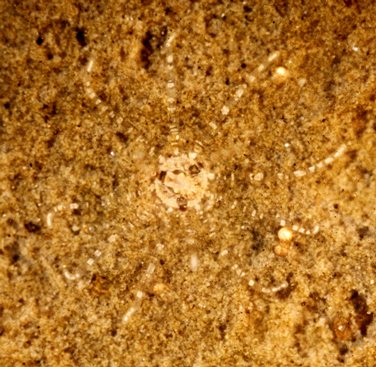
Edwardsia ivelli
Ivell�s Sea Anemone
A separate later finding � Haliplanella lineata
Subsequent research at a nearby location in the lagoon (TQ 202 043) identified a different species of miniature sea anemone: Haliplanella lineata, characterised by distinctive orange stripes not found on other British sea anemones. The specimens discovered were dwarf forms, only 2mm in height and 3mm in diameter. This is an introduced (non-native) species that inhabits harbours, estuaries and occasionally lagoons where salinity is below full seawater strength; it is unrelated to Edwardsia ivelli.
This finding is recorded here separately to avoid any confusion with the original Edwardsia ivelli record. The two are distinct species found at different locations within the lagoon.
Report: Dan Metcalfe, University of Brighton � BMLSS Sea Anemones � Haliplanella lineata � BioMar
The aquatic life of Widewater Lagoon is covered in detail on Andy Horton�s Widewater Lagoon page.