Reptiles Index
Snakes
Grass Snake
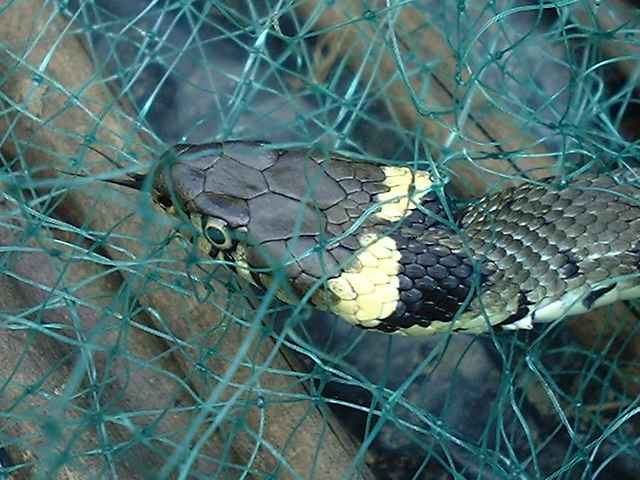
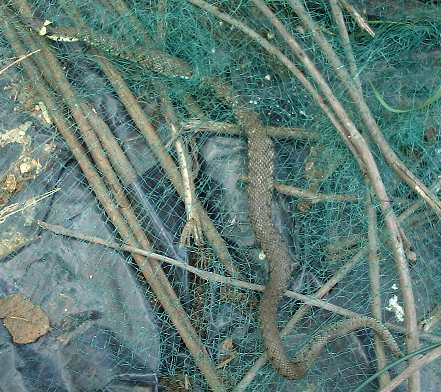
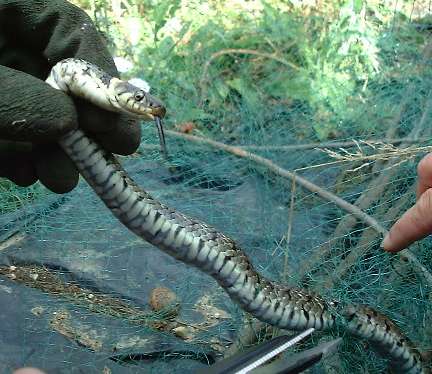
Natrix natrixLocation: Lancing Manor Allotment, 31 August 2003
The Grass Snake is Britain's largest native snake. It is easily identified by the distinctive yellow-and-black collar behind the head and its olive-green to grey-brown body with dark flank markings.
Note: This individual was found entangled in netting. The netting was carefully cut away to free the snake unharmed — a reminder never to leave loose netting lying around.
Grass Snakes are non-venomous and entirely harmless to humans. They are strongly associated with water and feed mainly on amphibians. Wikipedia Reference
Lizards
Slow Worm
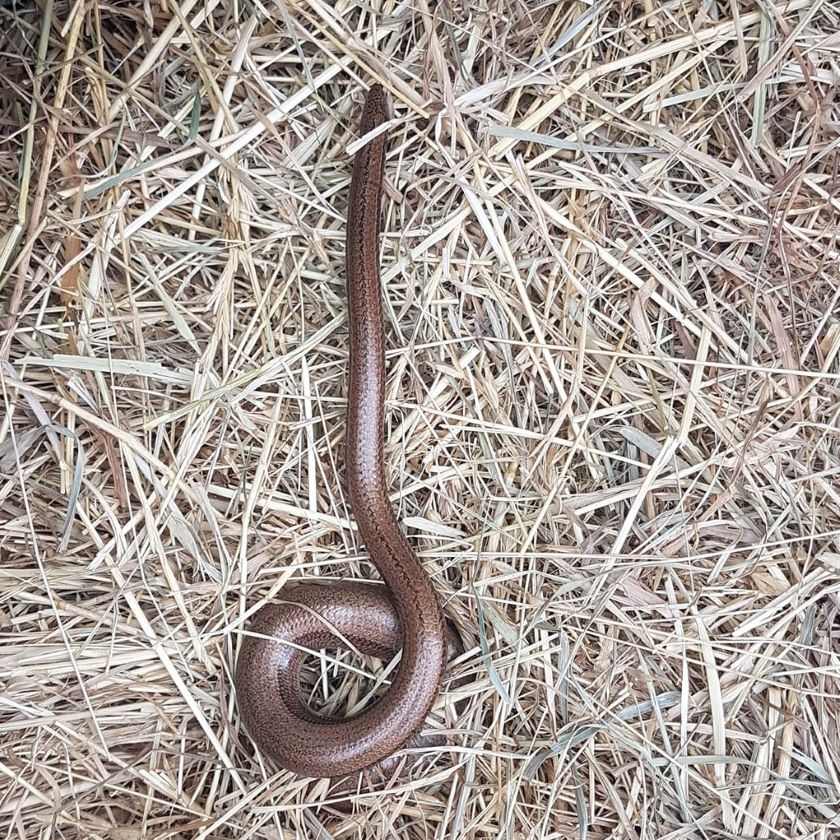
Anguis fragilisDate: 19 July 2023 | Photo: Andy Munday
Despite its snake-like appearance, the Slow Worm is a legless lizard. Unlike snakes, it has eyelids it can blink, a notched tongue, and can shed its tail (autotomy) to escape predators.
Females are brown with dark sides; males are typically grey or coppery-brown, sometimes with blue spots.
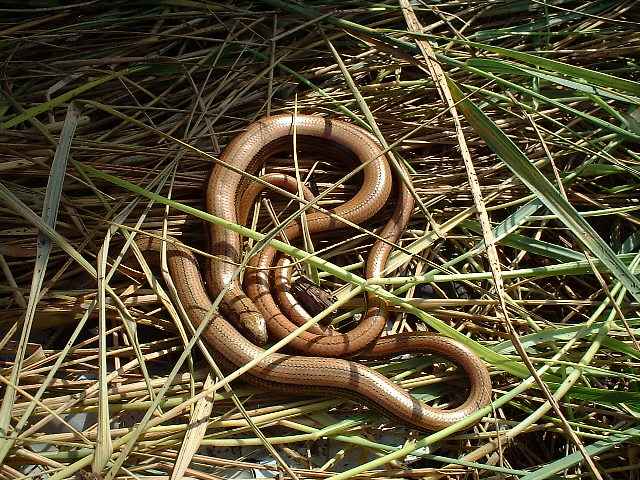
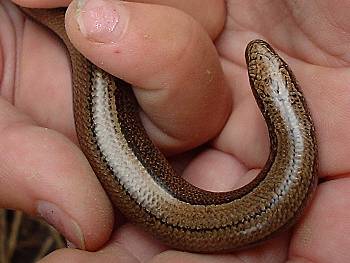
Slow Worm
Anguis fragilisLocation: Adur riverside at Shoreham, 24 August 2003
Found sheltering beneath wood debris. Slow Worms favour refuge sites like logs or compost heaps where they bask in retained warmth. They are wholly protected under the Wildlife & Countryside Act 1981.
Their diet consists mainly of slow-moving prey — slugs, earthworms and small insects — making them a gardener's ally. Wikipedia Reference